
The company
Making it possible to see inside concrete.
A team of 15 in Bergen and Oslo, and growing, combining radar physics, machine learning and structural engineering in one product, on projects in six countries.
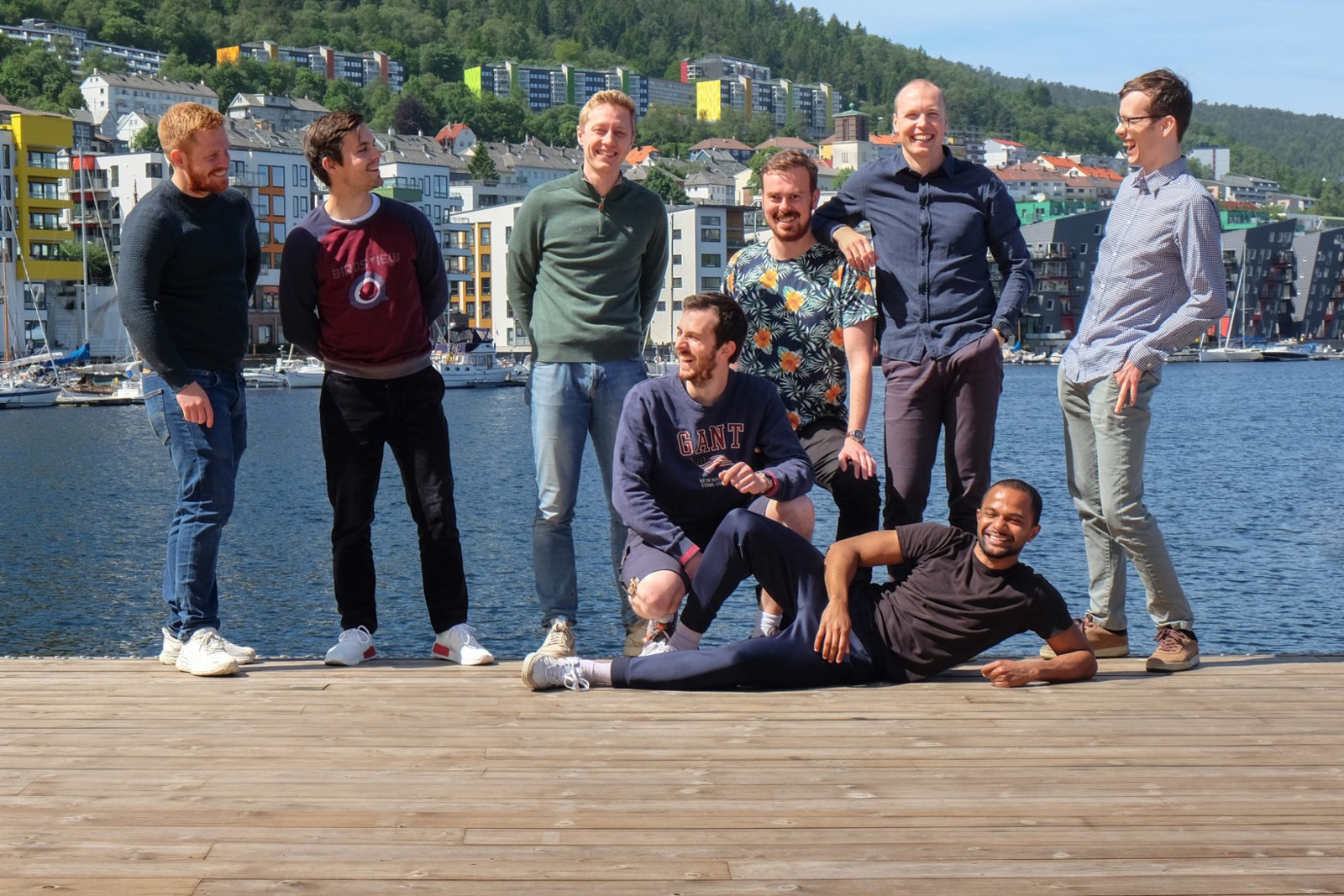
The Birdsview team, Solheimsviken, Bergen, 2025
How it started
It began with rotting utility poles.
Birdsview was founded by Olav Skogen and Simen Husøy, two engineering students at the Norwegian University of Science and Technology. They identified a problem without a clear solution: wooden utility poles in the power grid were rotting from the inside, invisible to inspectors until they failed. Together, they built a sensor-based detection system that solved this problem and has been used by one of Norway’s largest grid operators. That product is no longer sold; the company today is entirely focused on concrete.
As the expertise of Birdsview’s team expanded, we saw a familiar pattern emerge in concrete, the world’s second most used material and the backbone of every major structure ever built. The construction industry still relied on inspection methods that were slow, destructive, or unreliable.
Finally, in 2025, we launched our first concrete product and developed a technology platform powered by Full Waveform Inversion, ready-made sensors, and AI-driven analysis.
Milestones
How we got here
2017
Founded in Trondheim by two NTNU students.
2020
Full operational start, dedicated to deep tech.
2022
First product launched, for wooden utility poles.
2025
First concrete product launched.
2026
NOK 40.5 million raised. 15 people, offices in Bergen and Oslo, 100+ projects completed.
Principles
What we stand for
01
Real impact
Better data means fewer unnecessary demolitions, less material use and longer service life for the structures already standing.
02
Millimetre accuracy
Rebar position, cover and diameter are measured, not estimated. Every result is traceable back to the raw radar signal.
03
User-friendliness
One operator, no specialist interpretation. Results appear on the device in the field, ready to share the same day.
04
Built for what matters
We build for the decisions engineers and owners actually make: what to reuse, what to repair and where it is safe to cut.
The team
The people behind the scanner

Olav Skogen
CEO and Co-founder

Simen Husøy
CTO and Co-founder

Åsne Ådland-Dale
Head of Strategy and Business Development

Andreas Nesse Persson
Business Developer

Sondre Nærland
Product and Customer Manager

Johan Besse Stamnes
Computational Scientist
Kamilla Grindheim
Business Developer Intern

Henrik D. Andersen
Business Development Representative

Dinosshan Thiagarajah
DSP Engineer

Endre Dåvøy
DSP Engineer

Sondre Husøy
Computational Scientist

Michael R. P. Ragazzon
Robotics Engineer
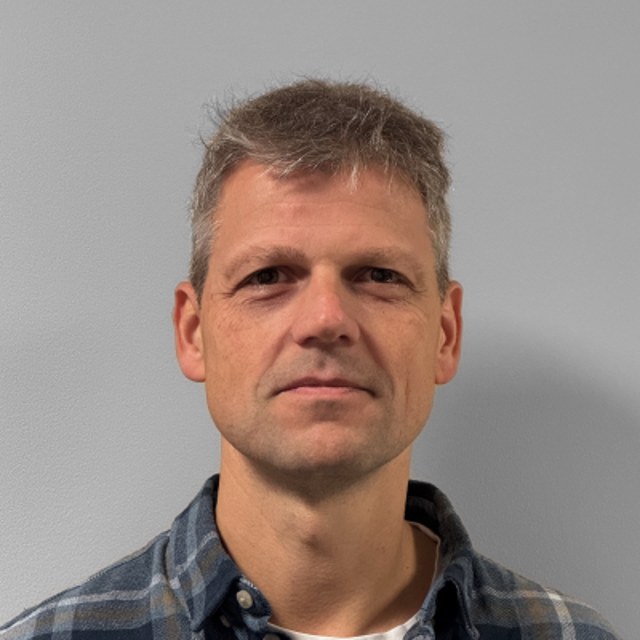
Kenneth Pettersen
Field Manager
Lucius Landschulze
Apprentice Full Stack Developer

Vibooshan Thiagarajah
Product Designer Intern

Even Berdal
Production Technician Intern
Investors
Backed by
In 2026 Birdsview raised NOK 40.5 million to take concrete scanning from its Nordic base into Europe and North America.











Sustainability and ESG
The greenest structure is the one you keep.
Our purpose is to prolong the lifetime of the built world. Better condition data means fewer unnecessary replacements, less waste and lower embodied carbon.
Our impact
Four ways scanning lowers footprint
Repair before replace
Concrete and cement account for a large share of global CO₂ emissions. Every structure documented well enough to keep in service is emissions avoided.
Non-destructive by default
No chiselling, no coring, no waste. Scanning leaves the structure intact and the site clean.
Fewer mobilisations
Up to 500 m²/hour survey speed means fewer site visits, less transport and shorter shutdowns.
Safer inspection work
Less time on scaffolding, in traffic and inside confined spaces for the people doing the survey.